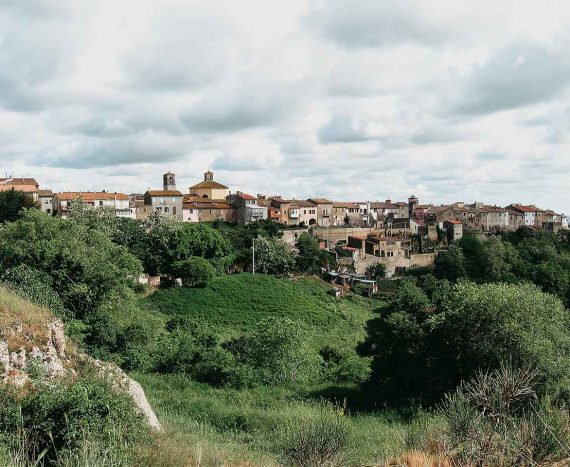
Monterosi: the village on the Via Francigena and its volcanic origin water mirror
This small village in Tuscia, whose name refers to a “mountain of roses,” was an important strategic point due to its proximity to the Via
The largest tourist association in Tuscia: over 60 partners including municipalities, organizations, businesses, and associations.
A new reference point is born for discovering Tuscia Viterbese with its historical and natural heritage, as well as its folklore, culture, gastronomy, and craftsmanship: an accessible Tuscia that is closer to everyone, a section of the Via Francigena reorganized with over 60 entities united for the new DMO in central Italy.
It’s “La Francigena e le vie del gusto in Tuscia,” the largest DMO in Tuscia Viterbese along the Via Francigena, which offers new tourism ideas to experience and explore up close the entire microcosm of that area in Central Italy, a treasure trove of history and heritage that surrounds Viterbo, with its striking badlands, necropolises, pilgrim routes, and places of meditation.
Walking the Via Francigena, the Olive Oil Route, and the Bandits' Path offers the opportunity to discover the Tuscia region, experiencing slow and mindful tourism while getting to know the local food and wine products.
From this, the idea of starting with the "basket" - historically a container used by pilgrims to store and carry food - to redefine the tourist experience in Tuscia was born.
The Pilgrim's Basket is indeed a memorabilia container that accompanies the traveler during the journey, designed to store the local food and wine products and allow them to be taken home, all while celebrating the local artistic and cultural heritage.
Discover the products
This small village in Tuscia, whose name refers to a “mountain of roses,” was an important strategic point due to its proximity to the Via

The small and characteristic village of Piansano, nestled among green fields and woods, has origins dating back to prehistoric times, as evidenced by the flint

The small village is located on the southern shores of the captivating Lake Bolsena, in a truly picturesque landscape. Here, in addition to the presence

Gradoli is situated on the northern slope of Lake Bolsena, nestled on a tuff spur at an elevation of 475 meters, surrounded by woods and

Lubriano, from the Etruscan “Lùbrie,” which means “place of purification,” is a small village located on a tuff promontory that overlooks the magnificent Valley of

Ischia di Castro is a town in the Lazio Maremma region, where the first settlements are believed to date back to the prehistoric Paleolithic and